How to Propagate Pothos from Cuttings: A Foolproof Step-by-Step
Pothos is the friendliest plant to propagate on earth. If yours isn't rooting, one of three things is wrong — and all of them are quick fixes.

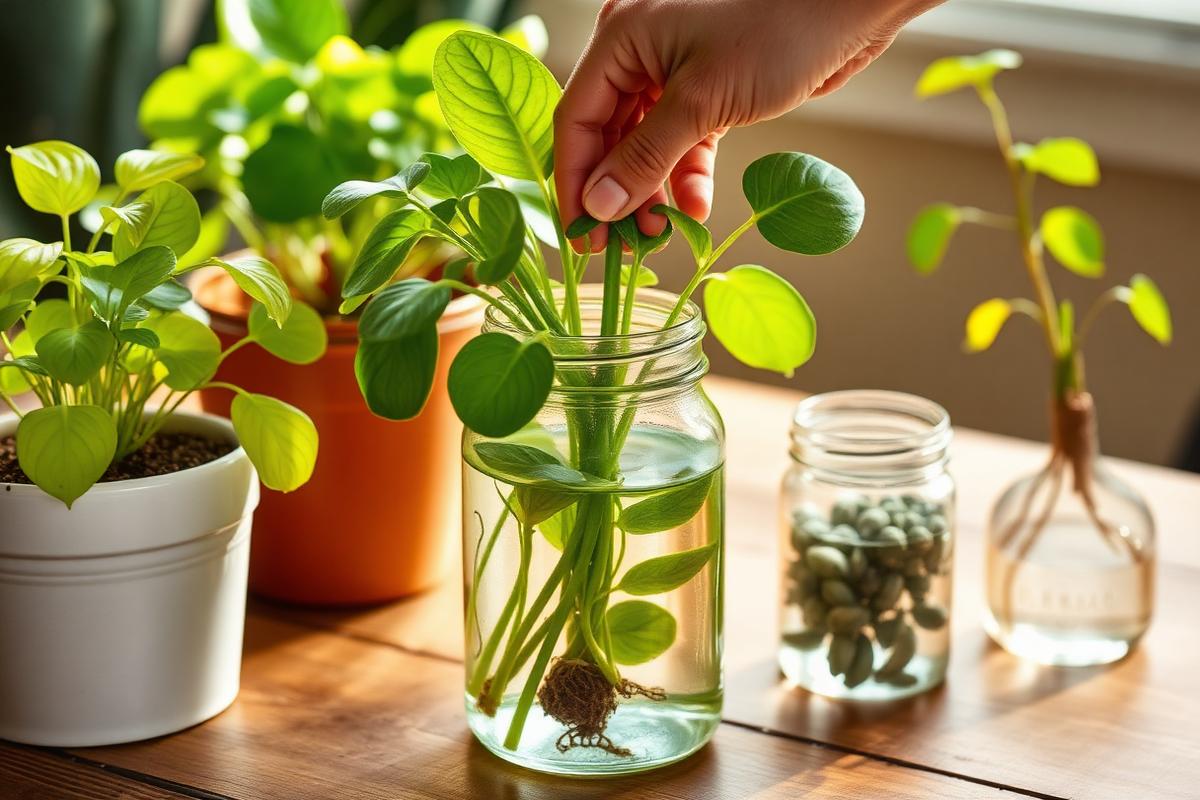
Where to cut: the node is everything
A pothos cutting will only root if it has a node — the small brown nub along the vine where a leaf attaches and an aerial root tip pokes out. Cut 1–2 cm below a node with clean, sharp scissors. A cutting without a node is just a leaf; it will sit in water indefinitely and never produce roots.
A cutting with one node and one leaf is enough. Cuttings with 2–3 nodes root faster and become bushier plants, but they're not required.
Water propagation, step by step
Place the cutting in a clear glass or jar of room-temperature water, with the node fully submerged and the leaf above water.
Set it in bright indirect light. Direct sun cooks the cutting; deep shade slows everything down.
Refresh the water once a week with fresh room-temperature water. This keeps oxygen levels up and prevents the slimy bacterial film that stalls rooting.
Roots typically appear in 10–21 days. Transplant when roots are 5–8 cm long, into a small pot of well-draining houseplant mix.
Soil propagation, step by step
Dip the cut end (optional) in rooting hormone powder. This isn't required for pothos but speeds rooting by a few days.
Push the cutting into moist, well-draining houseplant compost so the node is buried 1–2 cm deep.
Cover the pot loosely with a clear plastic bag to hold humidity around the cutting. Open it for an hour every two days to prevent mould.
Keep the soil just moist — never wet. Roots usually form in 3–4 weeks; you'll know it worked when new leaf growth appears.
Troubleshooting: why isn't it rooting?
The cutting has no node. The single most common mistake. Recut to include one.
The water is stagnant or warm. Change it weekly and keep the jar out of hot sun.
The room is too cold. Pothos roots best between 20–26 °C; below 18 °C, the process slows dramatically.
The cutting is rotting. A brown, mushy node smells slightly sour. Discard and start fresh — once a cutting rots, it cannot be recovered.
Key takeaways
- Every successful pothos cutting must include at least one node — the small bump where leaves and aerial roots emerge.
- Water propagation roots in 2–4 weeks; soil propagation is faster long-term but harder to observe.
- Refresh the water weekly to keep oxygen levels up and prevent bacterial rot.
- Transplant to soil when roots are 5–8 cm long — longer water roots adapt to soil poorly.
Frequently asked questions
How long does it take pothos cuttings to root in water?
Typically 10–21 days in warm bright conditions, sometimes up to four weeks in cooler rooms. You'll see small white root nubs emerging from the submerged node first.
Can I leave pothos cuttings in water permanently?
Yes — pothos will live indefinitely in water if you refresh it weekly and add a single drop of dilute hydroponic nutrient every two to three weeks. Growth will be slower than in soil, but plants stay healthy for years.
Do I need rooting hormone for pothos cuttings?
No. Pothos roots reliably without hormone. Rooting hormone speeds the process by a few days and can help marginal cuttings, but it's optional.
Related articles
More in Plant Propagation →
Mastering Plant Multiplication: A Horticulturist's Guide to Propagation Beyond Cuttings
Ready to expand your indoor plant collection or share your green thumb's bounty? Moving beyond simple stem cuttings, mastering various propagation techniques empowers you to multiply your favorite plants with confidence and precision.

Mastering Plant Multiplication: A Horticulturist's Guide to Propagation Techniques
Curious about expanding your indoor plant collection without buying new specimens? Propagation is the art and science of creating new plants from existing ones, a rewarding skill that brings horticultural satisfaction and lush greenery to your home.

Cultivating New Life: A Horticulturist's Guide to Diverse Propagation
Propagation is the art of creating new plants from existing ones, a fundamental skill for any indoor gardener seeking to expand their collection, share with friends, or simply understand the life cycle of their beloved greenery. This guide will demystify the core techniques, transforming you into a proficient plant parent capable of multiplying your verdant companions.

Cultivating Tomorrow's Garden: A Horticulturist's Guide to Plant Division
Unlock the secret to multiplying your favorite indoor plants and edibles through the straightforward yet effective technique of plant division. This guide provides comprehensive, horticulturist-approved steps to ensure your success.

Unlocking New Growth: Your Complete Guide to Indoor Plant Propagation
Transform your indoor garden into a flourishing oasis by learning the art of plant propagation. This comprehensive guide will equip you with the knowledge to multiply your favorite houseplants and edibles with confidence, ensuring a vibrant and expanding collection.

Multiplying Your Greenery: Advanced Propagation for Robust Indoor Plants
Beyond the basic snip, truly multiplying your indoor plant collection requires a deeper understanding of plant physiology and precise techniques. This guide explores advanced propagation methods to ensure robust, healthy new specimens.