The Kratky Method: Hydroponics for Beginners with Zero Equipment
If you've ever wanted to try hydroponics without buying pumps, timers, or a single watt of electricity, the Kratky method is the easiest way in.

What the Kratky method actually is
The Kratky method, developed by Dr. B. A. Kratky at the University of Hawaiʻi in the 1990s, is the simplest hydroponic technique that exists. A plant sits in a net cup at the top of a sealed reservoir. Its roots dangle into a nutrient solution. As the plant drinks the solution, the water level falls — and as it falls, it exposes a growing length of root to humid air inside the reservoir, where the roots take up oxygen directly.
Because the system runs without pumps, the only ongoing cost is nutrients and water. It also runs silently and survives power outages — both genuine advantages over circulating systems for apartment growers.
What you will need to build one
A wide-mouth one-litre mason jar (or any opaque reservoir of similar volume; cover clear jars with foil to block algae).
A 5 cm net cup that sits in the jar's mouth without slipping through.
A growing medium: hydroton clay pebbles, rockwool starter cubes, or coconut coir.
A general-purpose hydroponic nutrient labelled "Part A + Part B" or "all-in-one" — not a regular houseplant fertilizer, which lacks calcium.
A pH test kit and pH Down (most tap water reads 7.5–8.0; lettuce wants 5.8–6.2).
Step-by-step: your first Kratky lettuce
Start a lettuce seed in a moistened rockwool cube. Keep it warm (18–22 °C) and lit until you see two true leaves and roots emerging from the cube — usually 10–14 days.
Mix your nutrient solution per the manufacturer's seedling dilution (often half-strength for the first two weeks). Adjust pH to 5.8–6.2.
Fill the jar so that the bottom 2 cm of the net cup sits in the solution. Place the seedling-in-cube into the net cup, then surround the cube with clay pebbles to support it.
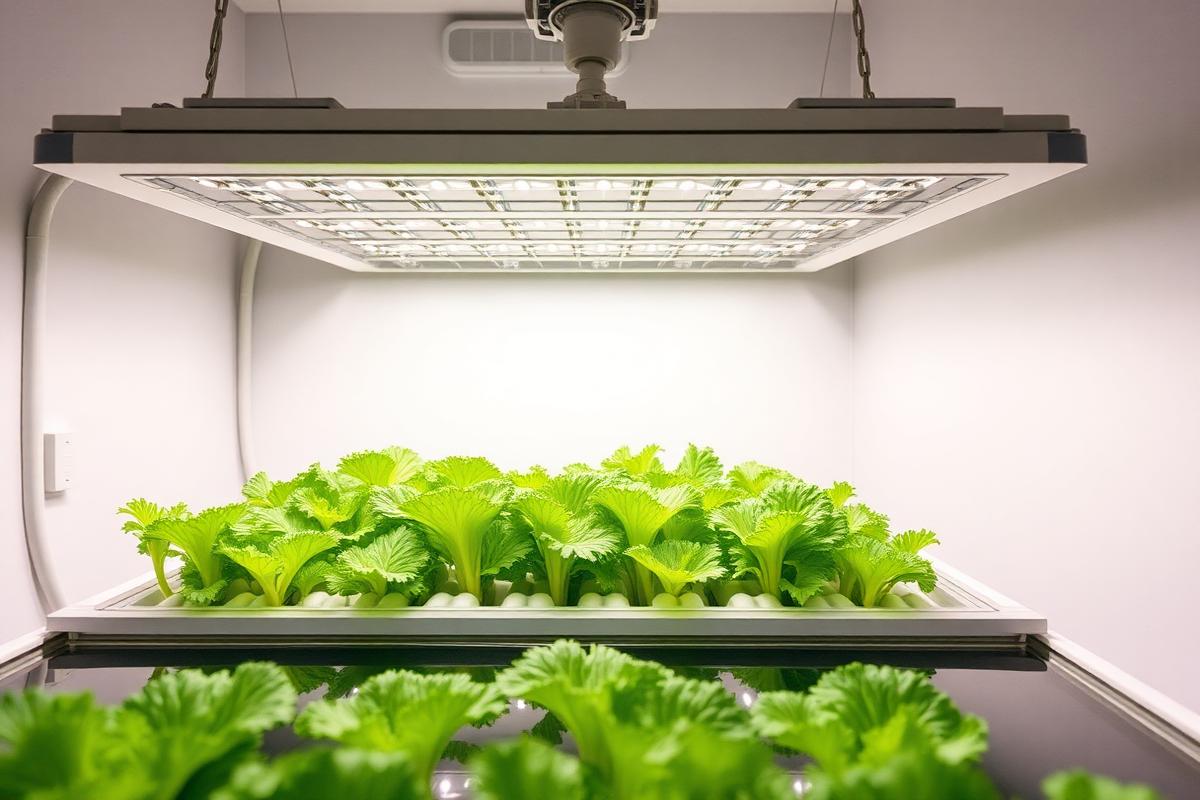
Place under a grow light running 14–16 hours per day, or in a bright south-facing window if you don't have a light yet.
Don't top up the water until the plant is mature. The growing air gap is the system; refilling it drowns the roots.
Common Kratky problems and fixes
Yellowing leaves with green veins usually means an iron lockout from a high pH. Test and adjust pH down to 6.0.
Brown, slimy roots indicate the solution got too warm (above 24 °C) and oxygen levels collapsed. Move the jar somewhere cooler or wrap it in reflective insulation.
Algae blooming on the inside of the jar is a light problem, not a nutrient problem. Use an opaque container or wrap clear ones in foil.
Key takeaways
- The Kratky method is a passive, non-circulating hydroponic system — no pumps, no electricity.
- It works best for short-cycle crops: lettuce, herbs, bok choy, and most leafy greens.
- A mason jar, a net cup, rockwool or clay pebbles, and a balanced hydroponic nutrient are all you need.
- Maintaining the air gap between water surface and net cup is the only critical step.
Frequently asked questions
Can I grow tomatoes with the Kratky method?
Technically yes, but it's not a good fit. Fruiting crops drink huge volumes of water and benefit from circulating, oxygenated systems. Stick to lettuce, herbs, bok choy, kale, and other leafy greens.
Do I need a grow light for Kratky lettuce indoors?
If you have a south-facing window with six or more hours of direct sun, you can manage. Anything less and lettuce will stretch and stay pale. A small full-spectrum LED on a 14-hour timer solves this for under fifty dollars.
How long does Kratky lettuce take from seed to harvest?
About 5–7 weeks total: 10–14 days from seed to transplant-ready seedling, then 3–4 weeks in the jar to a full head.
Related articles
More in Hydroponics & Soilless Growing →
Unlocking Hydroponic Potential: Precision Growing for Bountiful Indoor Yields
Dive into the world of hydroponics and transform your indoor gardening. This comprehensive guide equips you with the knowledge to establish and maintain a thriving soilless garden, optimizing for precision and abundant yields even in small spaces.

Mastering Micro-Hydroponics: Precision Growing for Compact Indoor Spaces
Transform your small indoor spaces into productive gardens with micro-hydroponics. This guide provides an authoritative overview of compact systems, essential nutrient management, and precise environmental monitoring for successful soilless cultivation.

Mastering Home Hydroponics: A Blueprint for Consistent Indoor Harvests
Embarking on a hydroponic journey within your home can transform the way you cultivate edibles, offering unparalleled control and efficiency. This comprehensive guide will equip you with the essential knowledge to establish and maintain a thriving soilless garden, ensuring a steady supply of fresh produce right from your living space.

Demystifying Hydroponics: Your Comprehensive Guide to Soilless Home Gardening
Embark on a journey into the world of hydroponics, a sophisticated method of cultivating plants without soil, using nutrient-rich water. This guide will demystify the science and practicalities, empowering you to grow robust plants in your home.

Unlocking Hydroponics: Your Blueprint for Resilient Home Edible Gardens
Embark on a journey into the world of soilless cultivation. This guide provides a comprehensive blueprint for home growers looking to establish robust and productive hydroponic edible gardens.

Mastering Practical Hydroponics: Systems, Nutrients, and Monitoring for Home Growers
Embarking on your hydroponic journey offers unparalleled control over your plants' growth and health. This comprehensive guide equips you with the fundamental knowledge to successfully cultivate a soilless garden, from choosing the right system to fine-tuning its essential parameters.